How to pick disc diameter and membrane material, what to confirm before requesting a quotation, and where micro-pore disc diffusers belong in a treatment train.

Diameter is not only a capacity decision. It sets how many units you need and how the air is distributed across the tank floor.
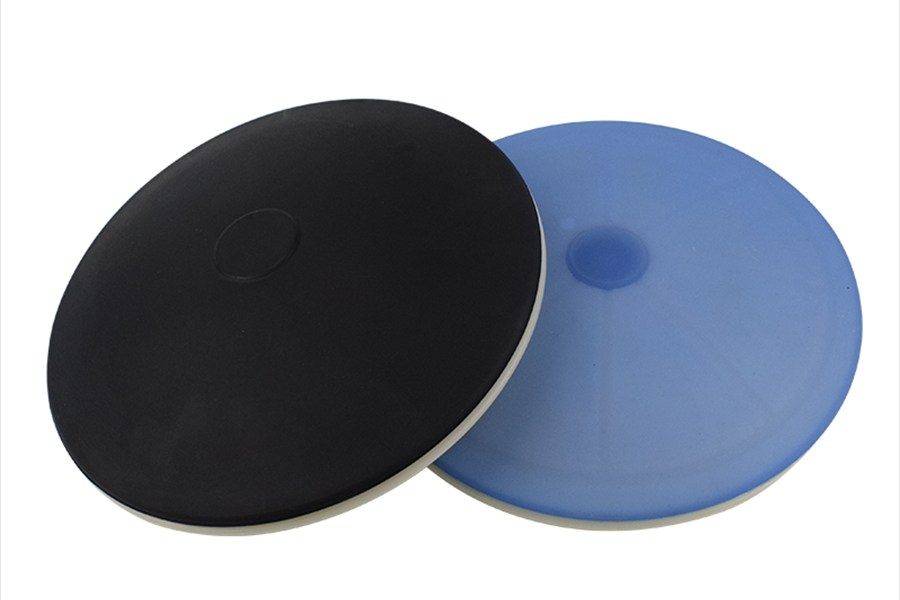
Disc aerators are supplied in 215 / 260 / 300 mm. All three use a micro-pore membrane that produces fine bubbles for oxygen transfer into the mixed liquor.
We recommend 215 mm and 260 mm in EPDM, and 300 mm in silicone. Those pairings reflect how each size is normally deployed rather than a restriction — other combinations can be quoted.
Larger discs cover more floor area per unit but coarser distribution. Smaller discs give finer control of where the air goes, at the cost of more connections and more fittings.
On a replacement, the existing air header spacing usually decides the diameter. If the pipe grid is fixed, changing disc size changes the total air per unit area and may need the blower reviewed.
The membrane is usually selected last and matters more than the diffuser body. This is the decision most projects get backwards.
| EPDM | Default for municipal wastewater. Good chemical resistance for typical duty and lower cost per unit. Weak point: oil, grease and some industrial solvents degrade it. |
| Silicone | Better tolerance to oils, greases and higher temperatures. Higher cost per unit. In straightforward municipal duty it may offer no advantage over EPDM. |
| Decision rule — municipal | Municipal influent with no significant industrial input → EPDM. |
| Decision rule — industrial | Effluent carrying oils, solvents or elevated temperature → silicone, or confirm the specific chemistry with us before ordering. |
Disc aerators are quoted against a confirmed configuration. These five answers turn an enquiry into a quotation rather than an exchange of questions.
| 1. Disc diameter | 215, 260 or 300 mm — or the requirement if the layout is already determined. |
| 2. Membrane material | EPDM or silicone, and the influent chemistry if it is industrial. |
| 3. Connection standard | How the disc attaches to the air distribution pipework — this varies by plant and by region. |
| 4. Membranes only, or complete disc assemblies | Replacement membranes and full assemblies are different line items and the price difference is significant. |
| 5. Quantity and destination | Total units, plus the destination port for freight. |
Give us tank dimensions, the required oxygen transfer and the blower pressure as well, and we can confirm a layout rather than just a unit price.
These are the published applications for our disc aerator range.
The main application: supplying oxygen to the mixed liquor in activated sludge and similar aerobic processes.
Air distribution under a fixed or moving bed, where even coverage across the filter floor matters more than raw output.
Oxygenation duty, where fine bubbles and even distribution matter for stock health.
Replacing failed or hardened membranes on an existing grid — normally the most common repeat order.
Most aeration complaints turn out to be maintenance, not the diffuser.
Over time the membrane fouls and hardens, and transfer efficiency falls long before anything visibly fails. Performance degrades gradually, so it is rarely noticed until the blower is working much harder.
Replacing membranes on a planned cycle is cheaper than running a fouled grid at higher blower pressure. It also means the replacement order can be scheduled rather than urgent.
Bubble size and pattern of perforations affect oxygen transfer far more than the membrane material alone. When comparing suppliers, compare on that rather than on the material name.
Yes — a micro-pore membrane disc diffuser produces fine bubbles for oxygen transfer. That is the category sometimes searched as a "fine bubble diffuser".
It follows from your oxygen demand, the tank floor area and the diffuser spacing you want. Tell us the tank dimensions, required oxygen transfer and blower pressure and we will confirm a layout.
Not as a single headline figure, because transfer efficiency depends on tank depth, airflow rate, water temperature and the mixing regime — a number quoted without those conditions would not be meaningful for your plant. We will work the layout against your actual conditions instead.
Yes, and it is often the sensible choice when the body and connection are sound. Tell us which you need, and the connection standard.
It depends on the duty and the fouling load, so we confirm a cycle per plant rather than quoting a universal interval. Fouling and hardening reduce efficiency gradually, which is why scheduled replacement beats reactive replacement.
On request, because it depends on diameter, membrane material, connection standard, whether it is membranes or complete assemblies, quantity and destination. Confirm those and we quote against them.
Send your water quality, treatment scale and target standard - we will confirm the right media, quantity and export packing.
Request a QuoteNo obligation - response within 24h (working days)