Straight answers on pore size, material, installation angle, quantity and price — the things usually settled after the first email.
Q1
What pore size should I specify?
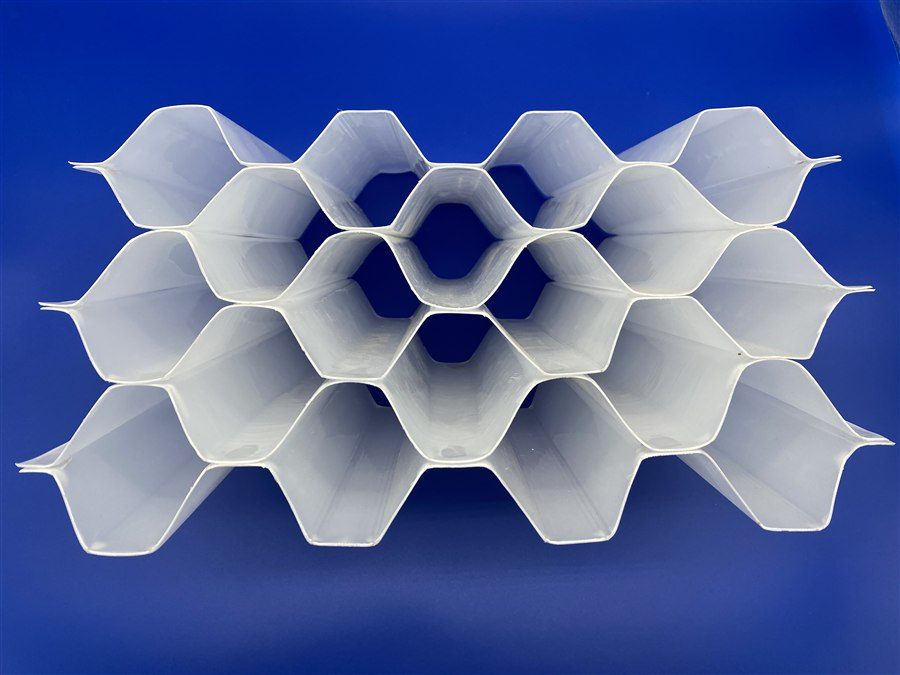
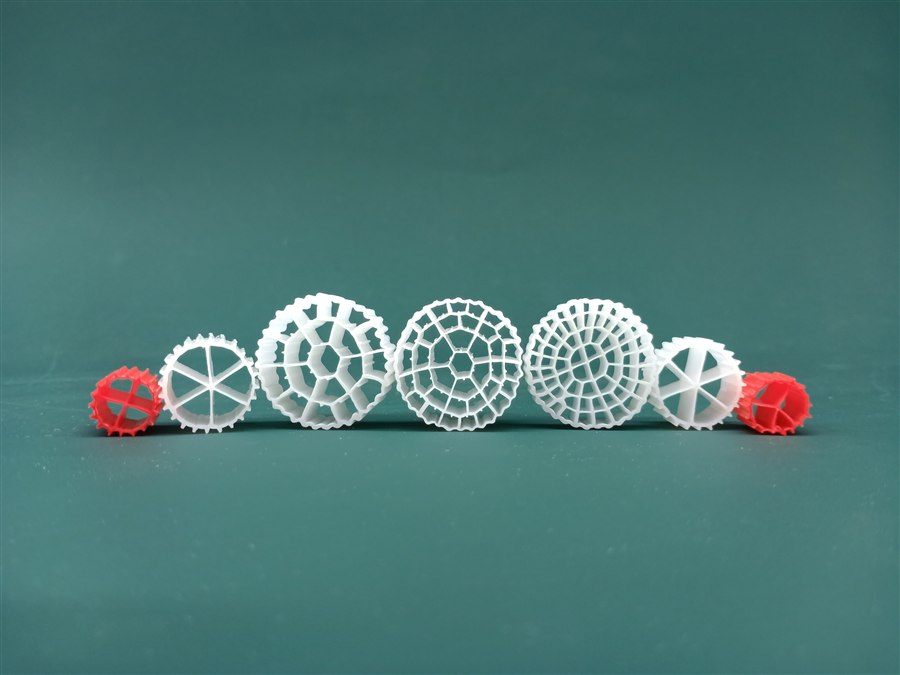
PP modules are published in Φ25 / 35 / 50 / 80 mm, FRP in Φ25–60 mm, and custom stainless steel up to Φ90 mm. Smaller pores give more surface area per m³ and capture finer solids, but they blind sooner on fibrous or oily loads. Larger pores stay clean longer and suit high-solids and desanding duty. Tell us the solids type and we will confirm the pore size rather than leaving you to guess.
Q2
How do I calculate how much I need?
Size on surface loading rate, not tank volume: required settling area A = Q ÷ SLR, against a published hydraulic load of 3–5 t/m²·h. Multiply the area by the stack height (4–5 m) to get media volume in m³, then check the velocity inside the tubes against the design figure of 2.5–3.0 mm/s. The full worked example is in our sizing and specification guide.
Q3
What installation angle do the modules use?
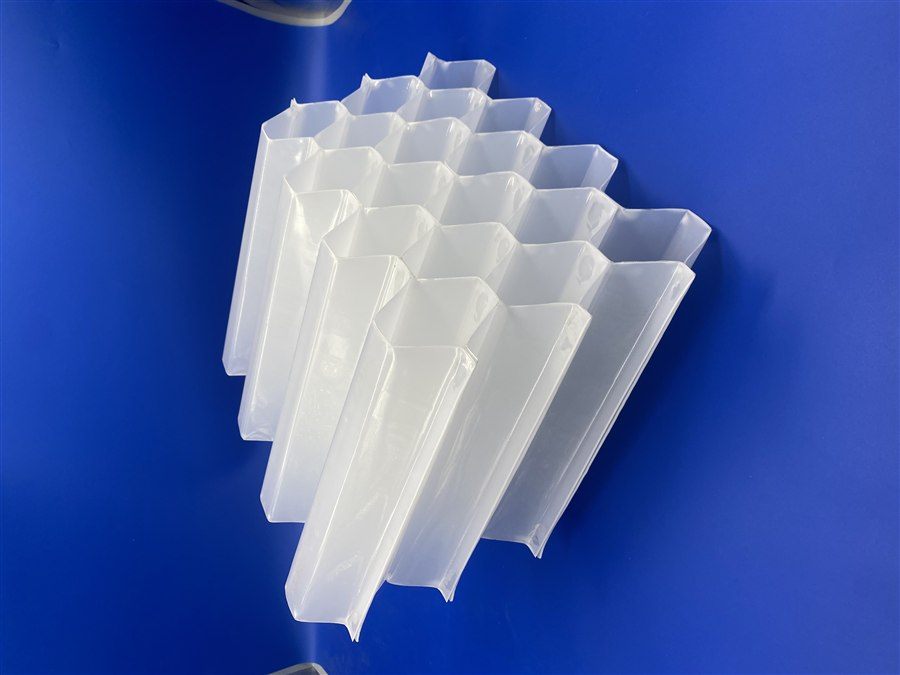
60° from horizontal. The angle is not a free choice: steeper costs effective settling area, and shallower stops settled sludge sliding back down the tube wall, which blocks the channels. Because the modules are inclined, the settling area you gain is larger than the module footprint — which is why the calculation works in settling area first and media volume second.
Q4
PP, PVC, FRP or stainless steel?
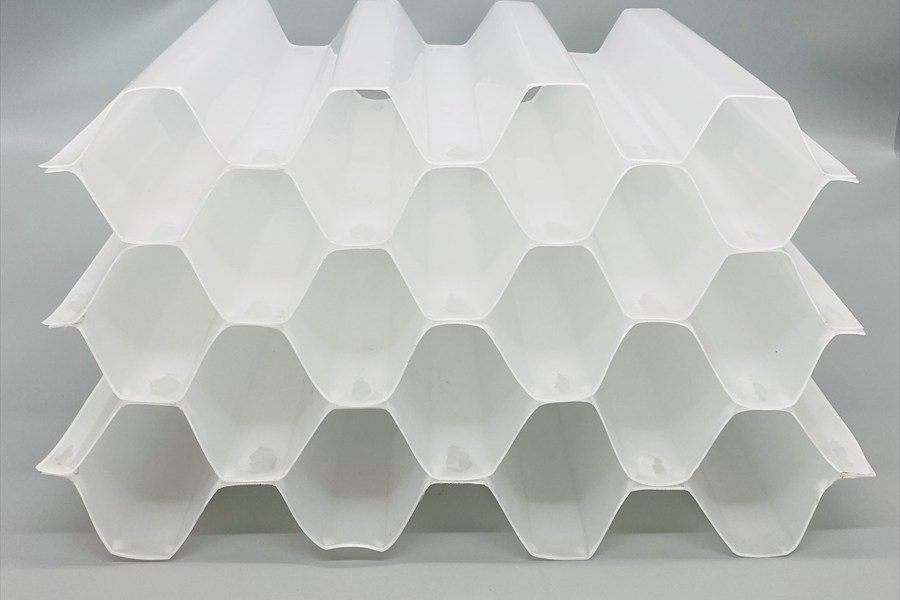
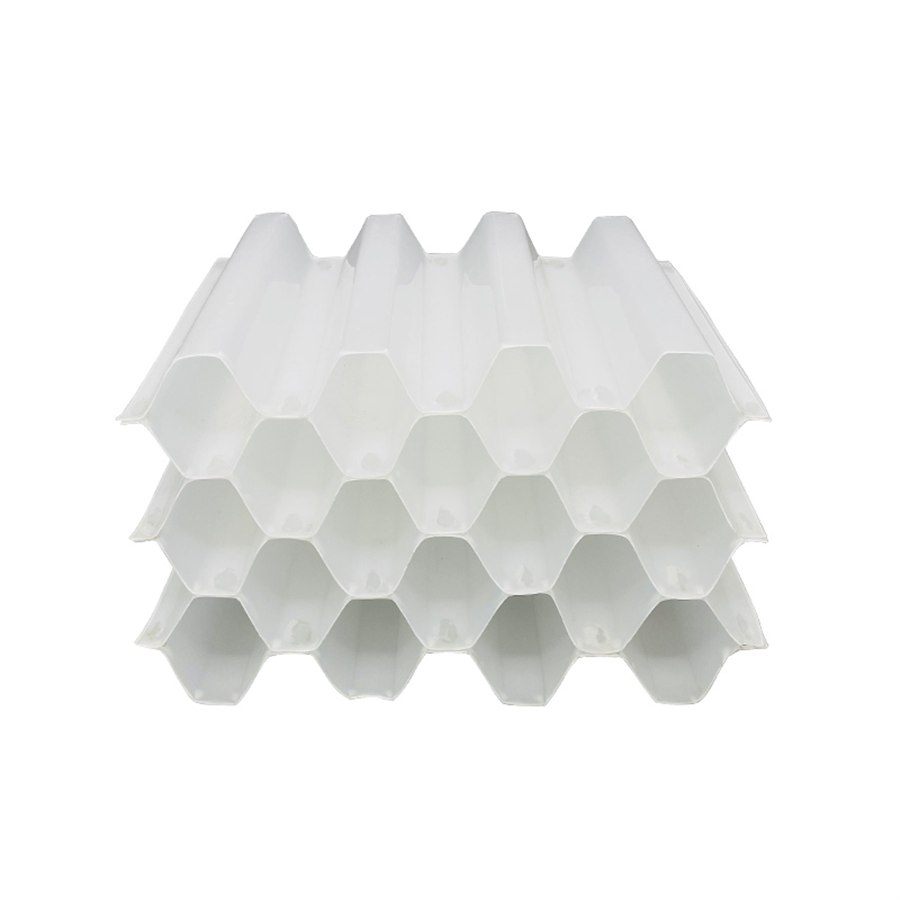
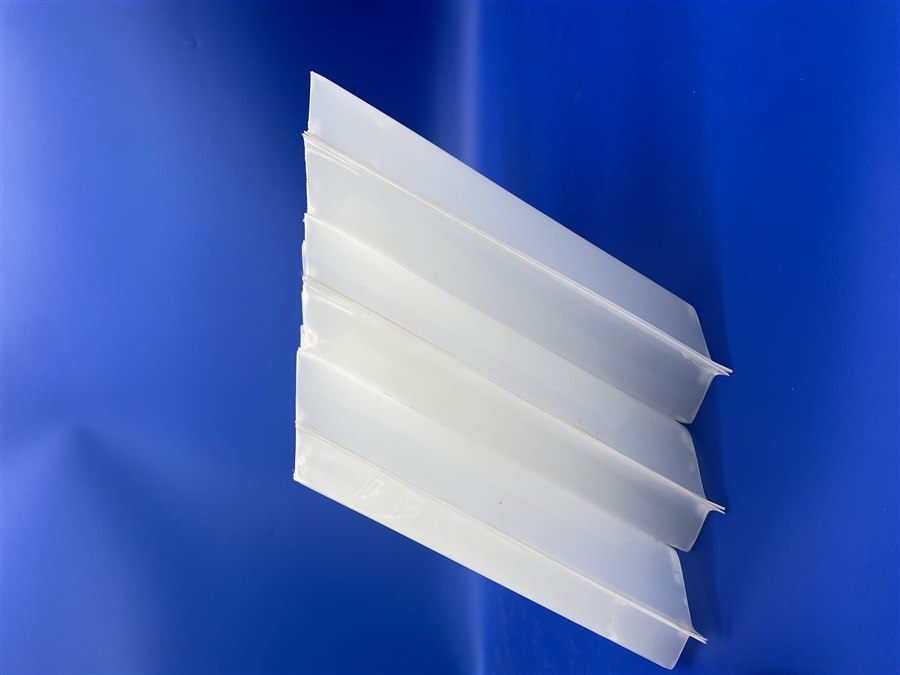
PP is the default for general municipal and industrial duty, with a published service life of 3–4 years; co-polymer based media extends that to 8–10 years in water. FRP reaches the highest surface area at 99–236 m²/m³, useful where the tank footprint is fixed. Stainless steel is built to order for high-temperature or aggressive duty. Modules are also available in PP, PVC, co-polymer or FRP with inclined or straight passages.
Q5
How are the modules installed?
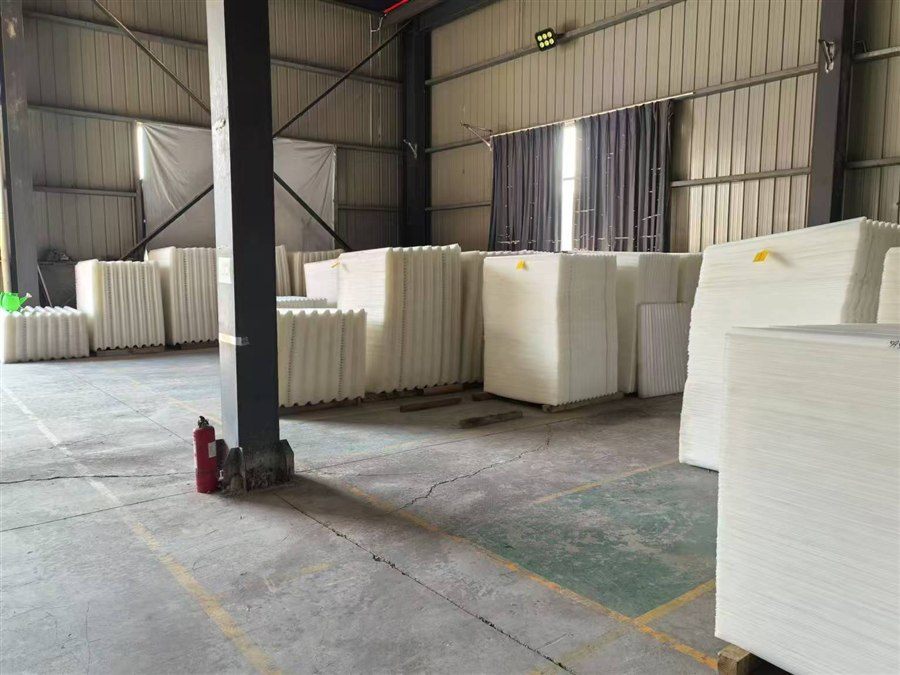
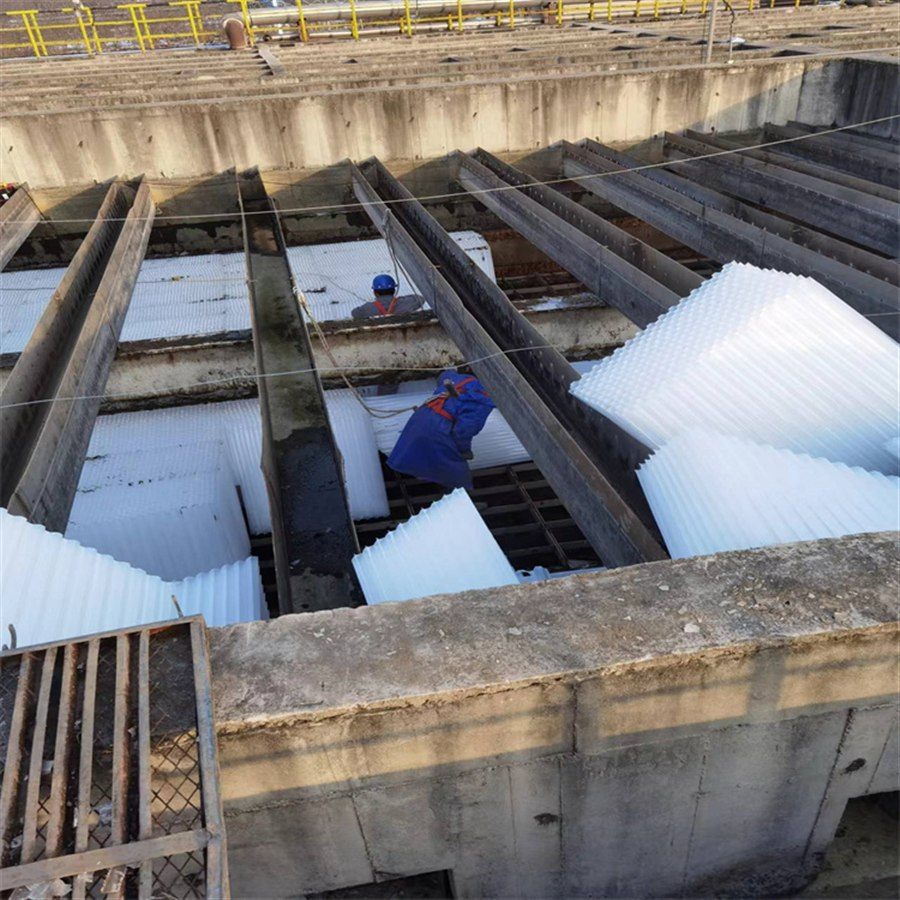
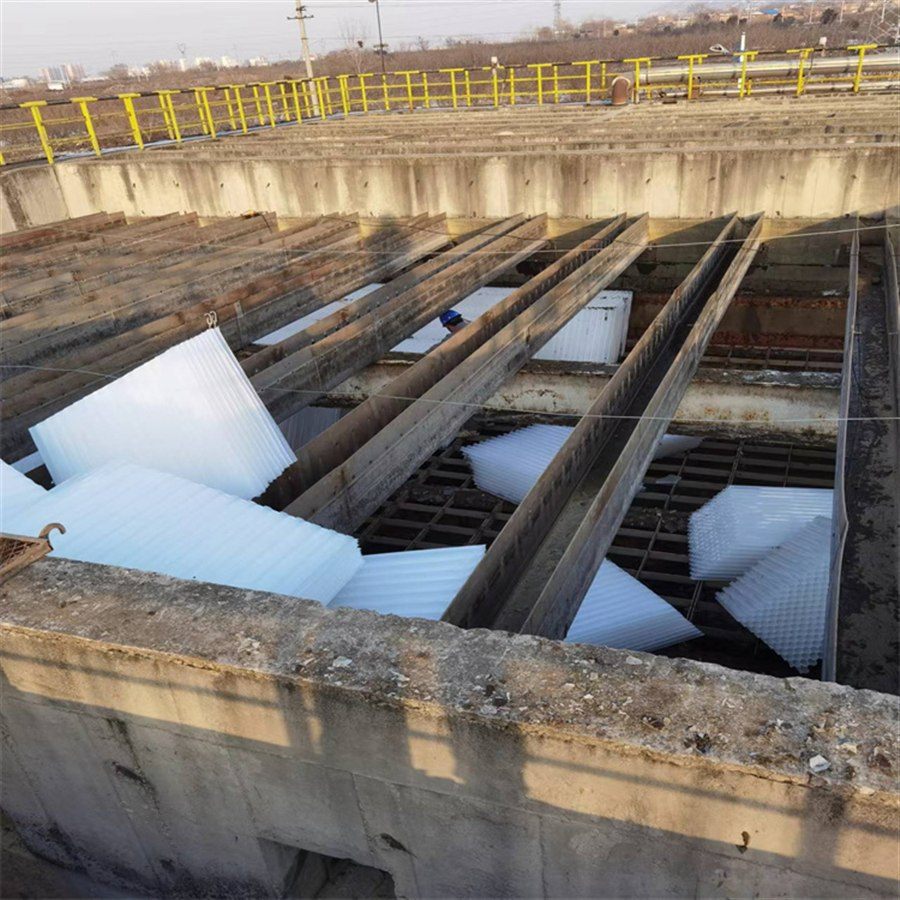
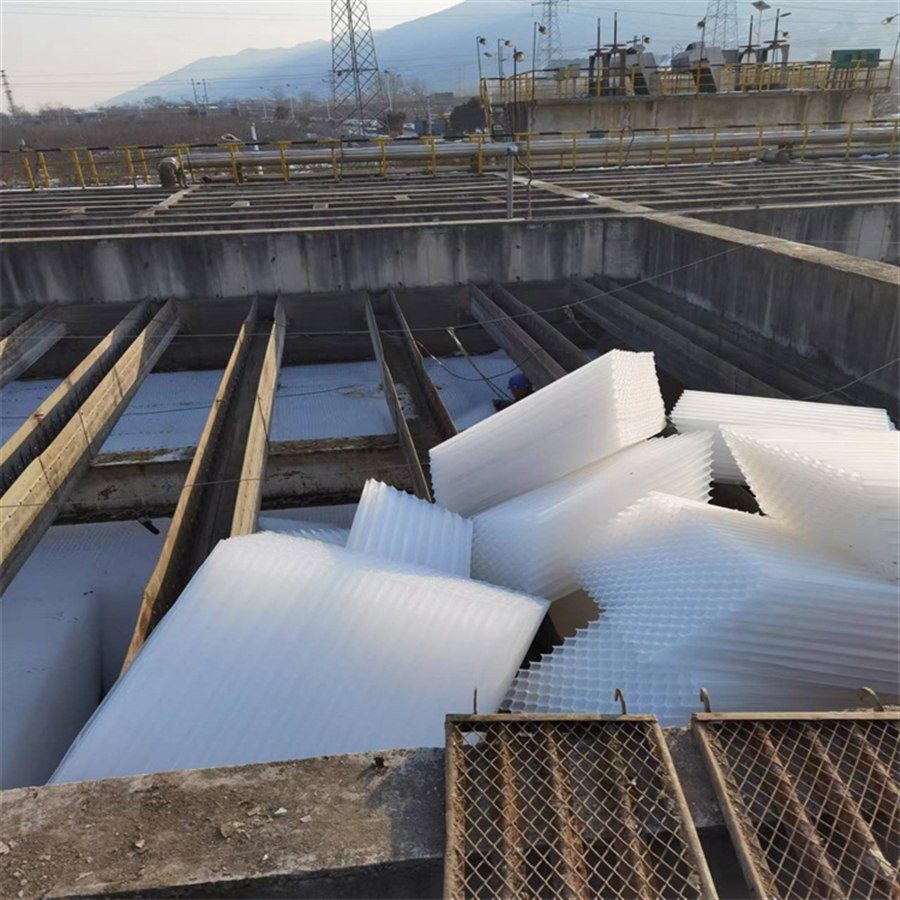
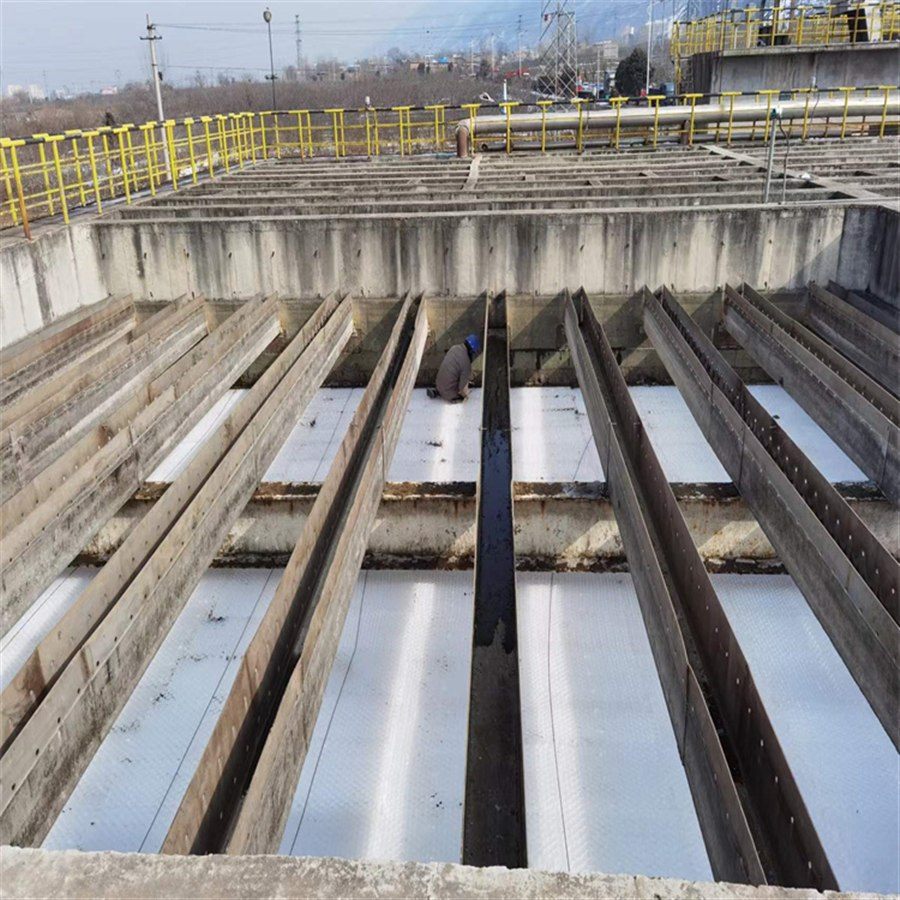
Stacked to a total height of 4–5 m on a support frame and restrained from above. Empty PP modules are light (22.8–46 kg/m³), so uplift or movement during drain-down is a real failure mode if they are not tied down. Most orders are retrofits into existing clarifiers, where modules are cut to fit around the existing weirs, launders and scrapers.
Q6
What does tube settler media cost?
Price is On request because it depends on material, pore size, sheet thickness, total volume, export packing and destination port. Send the flow rate, tank dimensions and target solids, and we quote against a confirmed specification rather than a list price that would not apply to your project.